In Persia, no guest has ever left a home without being offered tea. It is not a question — it is a reflex, a form of welcome as automatic as breathing. The word chai (چای) means tea, but in Persian culture it means something more: it means sit down, you are among friends, there is no rush.
Persian tea culture is one of the richest and least-told food stories in the world. It deserves more than a footnote. Here is a proper introduction.
How Tea Came to Persia
Tea arrived in Persia relatively late — in the late 19th century — via trade routes from China through Central Asia and Russia. Before tea, the Persian beverage of hospitality was sharbat, sweetened fruit syrups dissolved in cold water. Tea’s adoption was rapid and total. Within a generation it had displaced coffee and sharbat as the drink of the home, the bazaar, and the tea house (qahveh-khaneh, literally “coffee house” — the name predates the switch).
The samovar arrived alongside tea, imported from Russia, and the two became inseparable. By the early 20th century, every Persian household of any standing had a samovar on the table. By mid-century, it was simply part of what a home was.
The Samovar: Persia’s Ceremonial Tea Vessel
The samovar is a heated metal urn — traditionally brass or copper, more recently stainless steel or electric — used to maintain boiling water for hours. A small teapot (qoori) of concentrated brewed tea sits on top of the samovar, kept warm by the rising steam. When you pour tea, you take a small pour from the concentrated pot and dilute it with hot water from the samovar’s spigot, adjusting strength to each person’s preference.
This matters. Persian tea is not brewed in a single batch for everyone. It is individualised — each guest’s cup adjusted to how strong they like it. It is a small act of attentiveness that says: I am paying attention to you specifically.
In traditional households, the samovar runs from morning until the last guest leaves. It is never turned off while there are people in the house.
How to Brew Persian Tea Properly
The preferred tea in Persian culture is a black tea — traditionally from the Gilan and Mazandaran provinces on the Caspian coast, where Persia’s own tea is grown. Persian tea tends to be earthy, full-bodied, and less tannic than Assam or Darjeeling. When Persian tea is unavailable, a good Ceylon or Assam works well as a substitute.
The method: place loose-leaf black tea into a small teapot. Pour boiling water over the leaves and allow to steep for 10–15 minutes. The resulting concentrate should be extremely dark — almost mahogany — and very strong. This is correct. Each cup is then diluted to taste at the samovar. The tea should be served in clear glass estekaan (tea glasses), so the beautiful amber colour of the properly diluted tea is visible.
The colour is part of the aesthetic. A properly poured Persian tea — deep golden amber, clear, translucent — is considered beautiful in itself.
What Accompanies Persian Tea
Nabat — Rock Candy on a Stick
The most traditional Persian tea accompaniment is nabat, a large crystal of saffron-infused rock candy on a long stick. The proper way to drink Persian tea with nabat is not to stir it in but to hold the crystal between your teeth and sip the hot tea through it, letting the sweetness dissolve as you drink. It is called ghandi khoordan — drinking with sugar — and it produces a subtle sweetness entirely different from stirring in granulated sugar. It also makes the tea slightly golden from the saffron, which is, frankly, perfect.
Sohan, Baklava, and Persian Pastries
Persian tea is almost always accompanied by something sweet. Sohan is a saffron brittle from Qom, made with butter, sugar, pistachios, and cardamom — crunchy, saffron-golden, and intensely satisfying with strong tea. Baklava, in its Persian form (lighter and less syrup-soaked than its Greek counterpart), is another classic pairing. Our Persian sweets menu at FandoQ gives you a sense of this world.
Dates, Dried Figs, and Ajil
At more casual gatherings, tea arrives alongside a bowl of ajil — a Persian trail mix of dried fruits, toasted nuts, seeds, and sometimes candied chickpeas. Dates, in particular, are considered the ideal simple accompaniment to strong tea: their natural caramel sweetness balances the tannins without competing with them.
Tea at Persian Gatherings
If you have attended a Persian gathering — Nowrouz, a Yalda Night celebration, a family dinner — you will have noticed that tea appears at both ends of the meal and frequently in between. Before eating, tea is offered with small sweets to guests while they settle in. After the meal, tea comes again: this time more slowly, with pastries and fruit, as the real conversation begins.
Persians do not rush tea. The second pot of the evening is when the most important things get said. Business is discussed, stories are told, advice is given. In a culture that produced the world’s great poets — Rumi, Hafez, Sa’di — the art of sitting with someone over tea and talking properly is considered a serious skill.
To refuse tea in a Persian home is to slightly wound your host. Accepting it — even if you are not thirsty, even if you have just had tea somewhere else — is an act of respect and connection. You are saying: I am here, I am present, I am glad to be with you.
Ta’arof: The Art of Persian Hospitality
Tea in Persian culture cannot be separated from ta’arof — the Persian system of ritual politeness. If you visit a Persian home and are offered tea, the correct response is to initially decline. Your host will insist. You decline again. Your host insists more warmly. On the third offer, you accept.
This exchange is not inefficiency — it is a choreography of mutual respect. Each party signals that they do not wish to impose, and then ultimately yields to the relationship’s warmth. The tea you receive after this small ritual tastes better for it. It was offered three times. It was worth accepting.
Persian Tea at FandoQ NY
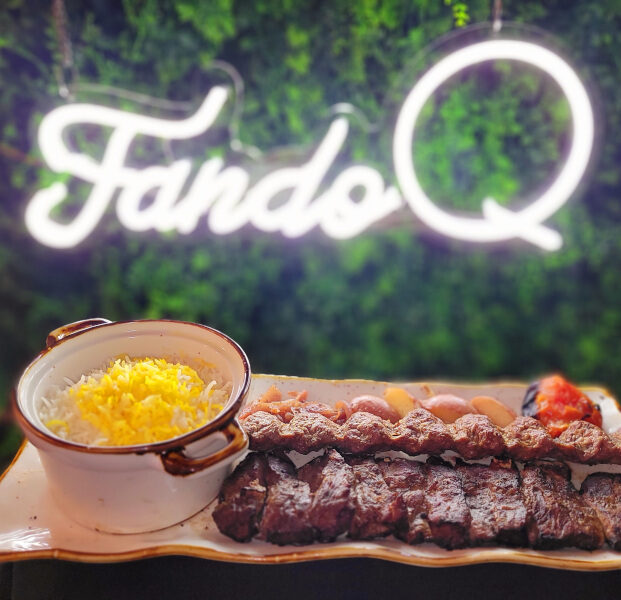
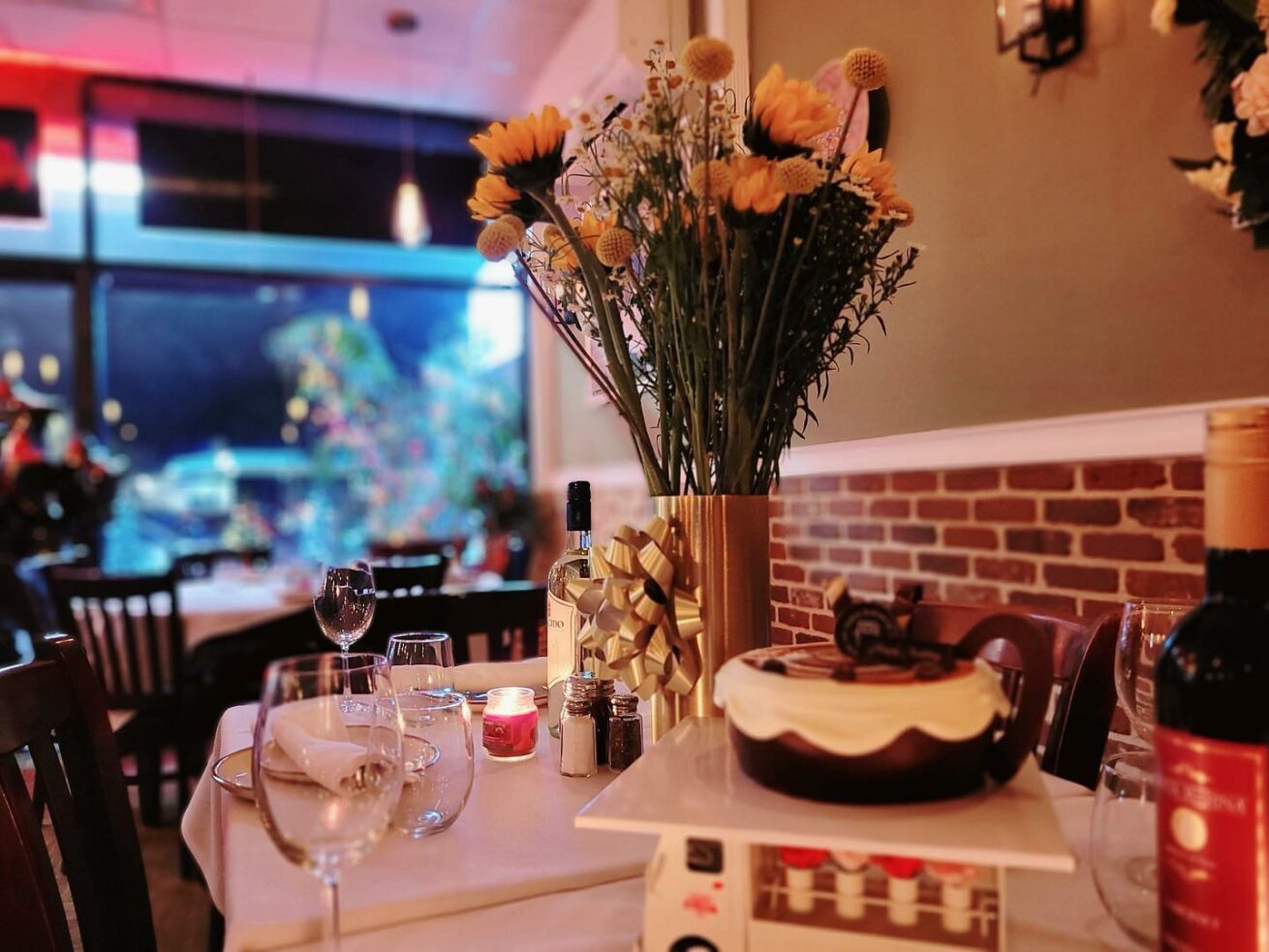
When you dine with us at FandoQ NY, tea is part of the experience. It is how a Persian meal properly ends — not rushed away but settled into, with something sweet, in the company of people you like.
We are at 1610 Old Country Rd, Westbury, NY 11590. Come for the kebabs. Stay for the tea.