If you have tasted Persian food, you have tasted saffron. It is in the rice, in the chicken marinade, in the ice cream, in the tea. It is the spice that turns a dish golden — not just in colour but in character. And it is the most expensive spice in the world by weight, worth more than gold in some markets. Here is everything you need to know about it.
What Is Saffron?
Saffron consists of the dried stigmas of the Crocus sativus flower — the three vivid crimson threads at the centre of each small purple bloom. Each flower produces exactly three stigmas. They must be harvested by hand, early in the morning, before the flower opens fully and the delicate threads are damaged by sunlight. A single pound of saffron requires the stigmas of roughly 75,000 flowers.
There is no mechanical substitute. It cannot be farmed at scale without quality loss. Every thread you buy was picked by human fingers.
Persia produces approximately 90% of the world’s saffron, primarily in the Khorasan region in the northeast of the country, where the dry climate, cold winters, and specific soil conditions create the conditions for the highest-quality crop. Persian saffron — called sargol (top of the flower) or negin (precious stone) grade — is considered the finest in the world.
Why Is Saffron So Expensive?
The labour is the cost. The harvest window is 2–3 weeks in late October and early November. The flowers open at dawn and must be picked the same morning. Workers begin before sunrise, kneeling in fields to gather the blooms, then sitting for hours to separate the three stigmas from each flower by hand. A skilled harvester can process perhaps 80 grams of dried saffron in a day of intensive work.
The result is a spice so concentrated that a pinch of perhaps 20–30 threads is enough to colour and flavour an entire pot of rice serving eight people. A gram goes a very long way. High-quality saffron, used properly, is less expensive in practice than its sticker price suggests.
Cheap “saffron” sold in large quantities for low prices is almost always adulterated — mixed with safflower petals, dyed corn silk, or paper fibres coloured with turmeric. Real saffron releases colour slowly when steeped; fake saffron bleeds immediately. Real saffron stains a wet fingertip orange-red; fake saffron wipes off yellow.
The History of Saffron in Persian Culture
Saffron has been cultivated in Persia for at least 3,500 years. Ancient Persian texts reference it as both a culinary spice and a medicinal substance. It was used to dye royal textiles, perfume baths, and flavour the food of kings. Persian traders carried it along the Silk Road to China, India, and eventually Europe, where it became one of the most prized commodities in the medieval spice trade.
The Persian relationship with saffron is not merely commercial — it is cultural. To cook with saffron is to participate in something ancient and distinctly Persian. The spice appears in Persian poetry. Shah Abbas, the great Safavid ruler of the 17th century, is said to have insisted on saffron in every meal. Today, Persian households use saffron with a casualness that would astonish Western cooks for whom it remains an occasional luxury.
Proven Health Benefits of Saffron
Beyond its flavour, saffron has been the subject of serious scientific inquiry. The results are compelling.
Mood and Antidepressant Effects
Multiple clinical trials have found saffron supplementation to be as effective as low-dose antidepressants (fluoxetine, imipramine) in treating mild to moderate depression, with fewer side effects. The active compounds crocin and safranal appear to modulate serotonin and dopamine pathways in the brain. A 2019 systematic review in the Journal of Integrative Medicine found significant antidepressant and anxiolytic effects across 12 randomised trials.
Antioxidant Properties
Saffron contains crocin, crocetin, and safranal — potent antioxidants that neutralise free radicals and may reduce oxidative stress associated with chronic disease. Crocetin in particular has been shown to inhibit the growth of cancer cells in laboratory studies, though clinical evidence in humans is still early.
Anti-Inflammatory Effects
Crocin has demonstrated anti-inflammatory properties in animal and in-vitro studies, potentially relevant to conditions including arthritis, cardiovascular disease, and neurodegenerative conditions. The evidence base is growing.
Cognitive Support
Several studies have investigated saffron’s effect on Alzheimer’s disease and age-related cognitive decline. A 16-week double-blind trial published in the Journal of Clinical Pharmacy and Therapeutics found saffron as effective as donepezil (a standard Alzheimer’s medication) in improving cognitive symptoms. The research is preliminary but consistent.
The doses used in these studies — typically 30mg of saffron extract per day — are meaningful quantities, not trace amounts. Regular culinary use provides smaller amounts, but even modest intake contributes to these bioactive compounds in the diet.
How Saffron Is Used in Persian Cooking
The first rule of cooking with saffron: always bloom it first. Grind a pinch of threads with a small cube of sugar in a mortar and pestle until it becomes a fine orange-red powder, then dissolve in 3–4 tablespoons of hot (not boiling) water. This releases the colour and flavour compounds that are locked in the threads. Adding dry threads to a hot dish gives you almost nothing — the compounds do not release properly without this step.
The second rule: add it near the end of cooking, or use it as a finish. Prolonged high heat degrades saffron’s volatile aromatic compounds and can make it bitter.
In Persian cooking, bloomed saffron water is used in:
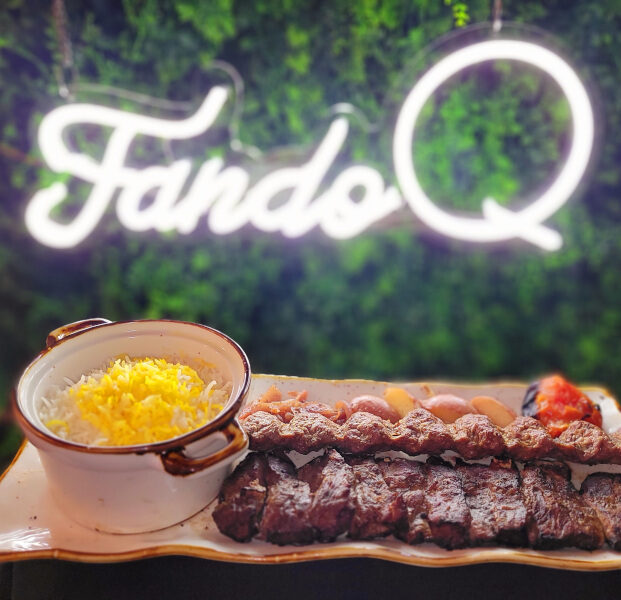
- Rice — drizzled over the finished dam rice and the tahdig layer for colour and fragrance
- Chicken marinades — as in Joojeh Kabab and Zereshk Polo Morgh
- Kebab finishing — brushed over Kubideh and Barg immediately after they come off the grill
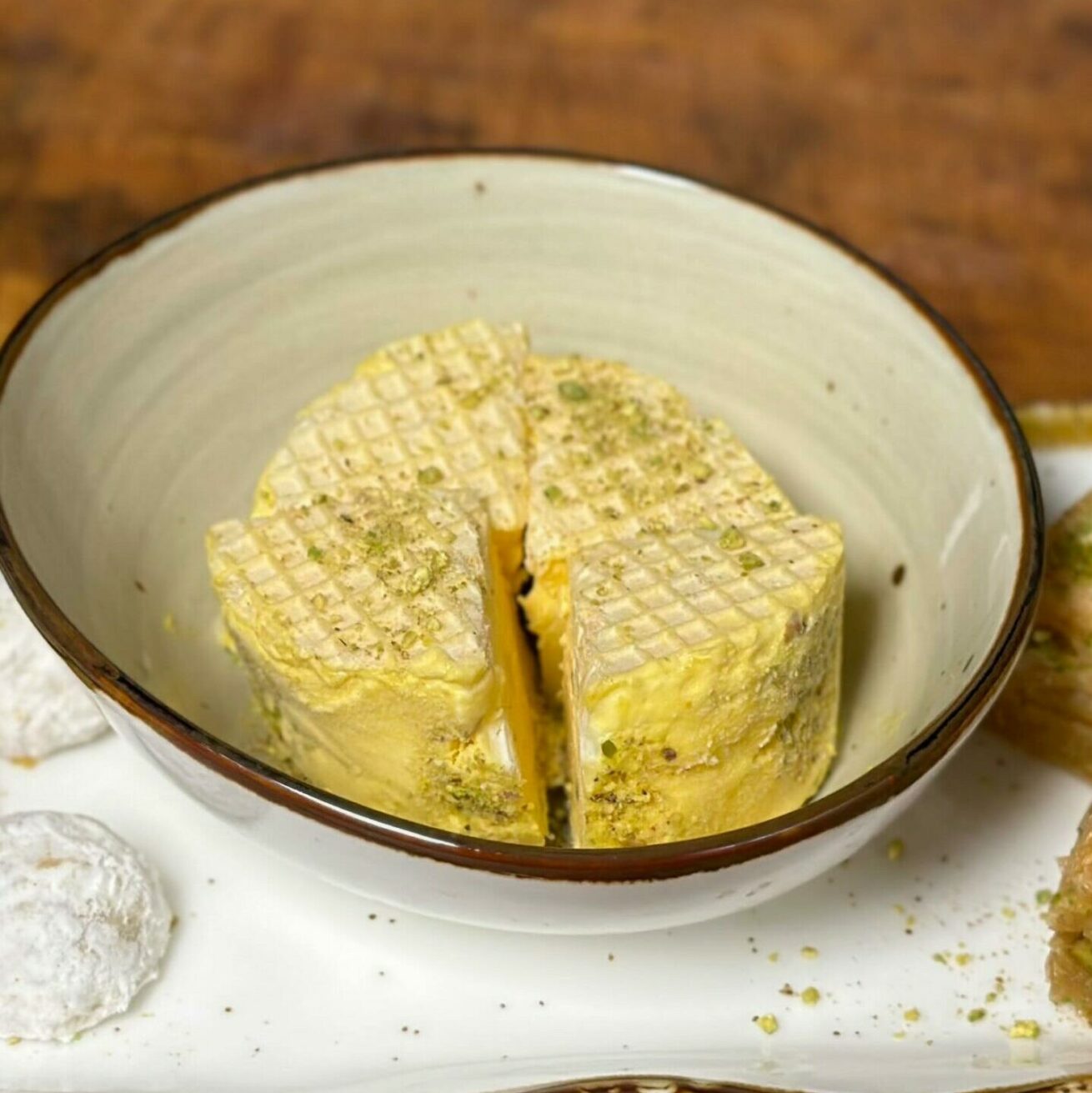
- Desserts — in Bastani (saffron ice cream), sholeh zard (saffron rice pudding), and halva
- Tea — dissolved into nabat rock candy or brewed into a medicinal saffron tea
Saffron at FandoQ NY
We use real Persian saffron throughout our kitchen — not as a luxury touch but as a foundational ingredient. It is in the rice that arrives with every kebab. It is in the chicken you taste in the Joojeh and the Zereshk Polo Morgh. It is in the ice cream we serve for dessert.
You cannot fake that colour. You cannot fake that flavour. Come taste it at FandoQ NY, 1610 Old Country Rd, Westbury, NY — where the golden spice of Persia is part of everything we do.