
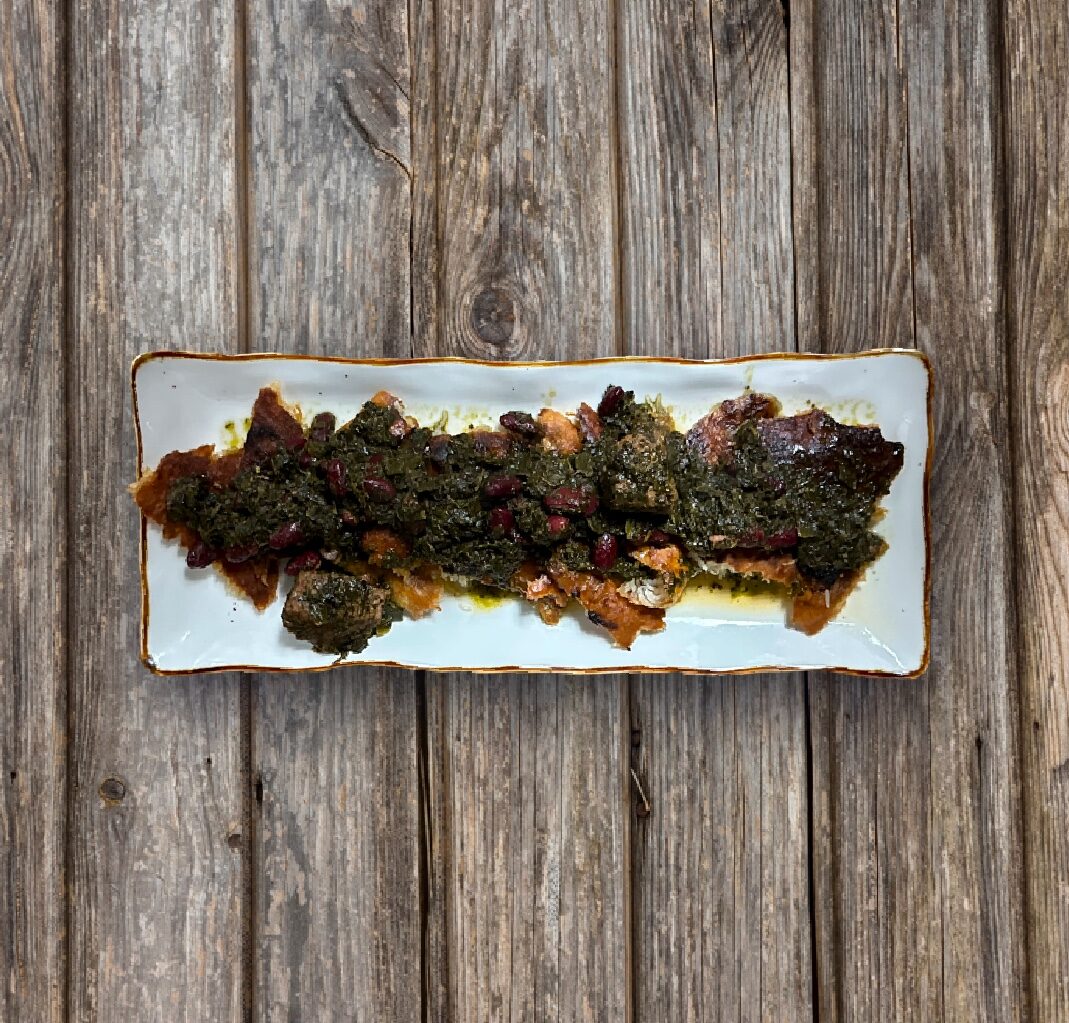
Tahdig (pronounced tah-DEEG) is one of the most beloved treasures of Persian cuisine — and among the most technically rewarding to master at home. The word means “bottom of the pot” in Farsi, and that is exactly what it describes: a golden, perfectly crispy crust of saffron-scented rice that forms on the floor of the cooking vessel while the layers above steam to light, fluffy perfection.
In Persian households, tahdig is not a side dish — it is the centerpiece. When the pot is inverted and the crust emerges as a single golden dome, there is a moment of collective admiration before the rush to claim the best pieces. At FandoQ in Westbury, NY, our rice dishes always include tahdig, and the sound of that crust cracking at the table is one of our signature moments.
The Cultural History of Tahdig
The tradition of the crispy rice crust dates back centuries in Persian cooking. Long before the rice cooker, Persian cooks developed the dam technique — slow-steaming rice under a tight cloth-wrapped lid — to produce both light, separate grains and the prized crust beneath. Every Persian family has their preferred method: thin and lacy, or thick and bronzed. Tahdig made with flatbread (nan-e lavash) or sliced potato offers different textures. Getting the tahdig right is a point of culinary pride across Persia — it is where technique becomes tradition.
Ingredients
Serves 4-6
- 2 cups (400g) long-grain basmati rice
- 2 tbsp kosher salt (for soaking)
- 3 tbsp neutral oil or ghee
- ¼ tsp saffron threads, ground
- 3 tbsp hot water (to bloom saffron)
- 1 tbsp plain yogurt (optional — adds tenderness to crust)
Step-by-Step Instructions
Step 1: Soak the Rice
Rinse basmati rice in cold water until the water runs clear (4-5 rinses). Cover with cold water, add salt, and soak 30-60 minutes. Soaking removes surface starch for fluffier, more separate grains.
Step 2: Parboil
Bring a large pot of salted water to a rolling boil. Drain soaked rice and boil uncovered for 6-7 minutes — until partially cooked but still firm at the center (bite a grain: you should see a white dot). Drain in a colander and rinse briefly with cold water.
Step 3: Bloom the Saffron
Grind ¼ tsp saffron to a fine powder. Dissolve in 3 tbsp hot water and steep 10 minutes. It should turn vivid, jewel-bright gold. This saffron water is what gives tahdig its signature color.
Step 4: Build the Tahdig Base
Heat a heavy-bottomed pot over medium heat. Add oil or ghee. Mix 3-4 spoonfuls of the parboiled rice with all the saffron water (and yogurt if using). Spread evenly across the bottom of the pot — this becomes your crust.
Step 5: Mound the Rice
Add remaining rice in a loose pyramid shape — do not compact it. Poke 5-6 holes through with a wooden spoon handle to allow steam to escape. Drizzle 1 tbsp oil over the top.
Step 6: Steam Under a Wrapped Lid
Wrap the pot lid in a clean kitchen towel, folding corners up so they do not touch the burner. Place tightly on pot. Turn heat to medium-high for 3 minutes, then reduce to the lowest possible flame. Cook 35-45 minutes without lifting the lid. The towel absorbs steam that would otherwise fall back and soften the crust.
Step 7: Release the Tahdig
Remove pot from heat. Stand it in a shallow pan of cold water for 2-3 minutes (thermal shock helps release). Remove lid, spoon the top rice onto a platter, then invert the pot over a large plate. The tahdig should emerge as a golden-crispy disc. Even if it breaks, it is delicious.
Pro Tips
- Use real basmati — aged long-grain basmati is non-negotiable. Short-grain varieties will not produce the right texture.
- Don’t skip the soak — it makes the difference between clumped and perfectly separate grains.
- Low and slow — the biggest mistake is impatience. Medium heat burns the crust before the rice finishes. Trust the 40-minute wait.
- Listen for the sizzle — a faint sizzling toward the end means the crust is forming properly. It is a good sound.
- Quality saffron matters — good saffron blooms to a vivid gold. Dull yellow means old or adulterated saffron; the flavor will be flat.
Serving Tahdig at FandoQ
At FandoQ, tahdig is served alongside our Persian stews like Ghormeh Sabzi — whose silky herb sauce poured over the rice creates one of Persian cuisine’s great textural contrasts. It also pairs beautifully with our signature kebabs. If you want to experience perfectly executed tahdig without the 40-minute wait, visit us at 1610 Old Country Rd, Westbury, NY. It comes with every rice dish on our menu.