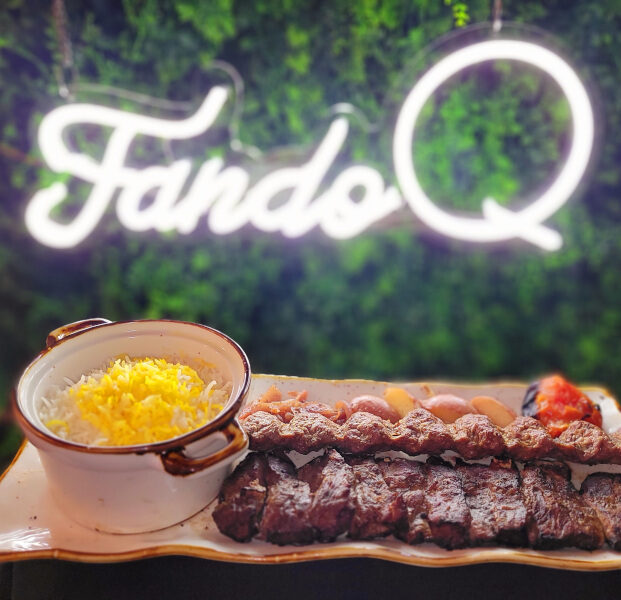
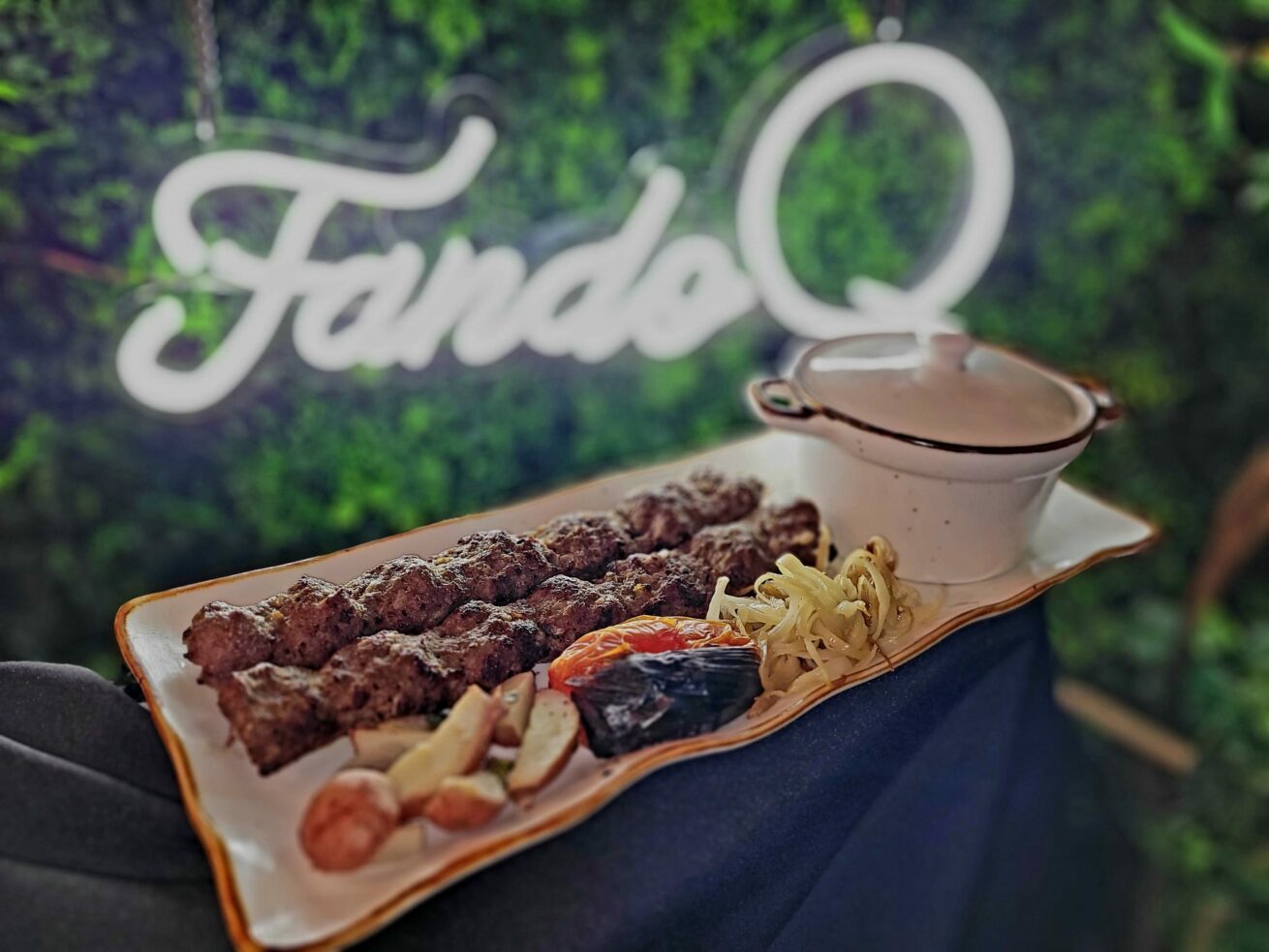
Kubideh is the most iconic Persian kebab — and the most deceptively simple. Ground meat shaped onto wide flat skewers, grilled over open flame until the outside develops a gentle char and the inside stays juicy and almost custardy. That description sells it short. A great kubideh achieves a particular texture and flavor that is difficult to explain until you have tasted it: savory and clean, deeply satisfying, with a warmth that feels like Persian home cooking at its most elemental.
At FandoQ in Westbury, NY, Kubideh is one of our most ordered dishes — a first choice for first-time visitors and a consistent favorite for longtime regulars. This recipe brings the restaurant method home.
The History of Kubideh in Persian Cuisine
Kubideh (also spelled Koobideh) has been a staple of Persian cooking for centuries. The name comes from the Farsi verb kubidan — to pound or grind. In the era before mechanical grinders, cooks would literally pound meat on a flat stone until it reached the fine, paste-like consistency required for shaping onto skewers. This gave the kebab its characteristic density and the ability to adhere to the metal without falling apart during grilling.
The dish is eaten throughout Persia, from Tehran’s street vendors to formal dinner tables, always served with saffron rice, grilled tomato, and raw onion. It is also central to Persian hospitality — when guests arrive unexpectedly, kubideh is the dish a host makes to show care and abundance. Few things in Persian cuisine carry the same weight of generosity and welcome as a plate of freshly grilled kubideh.
Ingredients
Serves 4 (makes 8 skewers)
- 800g (1¾ lb) ground beef (80/20 fat ratio — leaner ground beef will fall off the skewer)
- 1 medium onion, very finely grated (use a microplane; squeeze out excess liquid)
- 1 tsp kosher salt
- ½ tsp ground black pepper
- ¼ tsp ground turmeric
- ¼ tsp ground sumac (optional but traditional)
- ½ tsp baking soda (helps tenderize and bind)
- 1 egg yolk (helps binding)
For serving:
- Saffron rice with tahdig (see our tahdig recipe)
- 2 tomatoes, halved and grilled
- Butter for finishing
- Sumac for sprinkling
- Flatbread (lavash or pita)
Step-by-Step Instructions
Step 1: Grate the Onion Properly
This is the most important step most home cooks skip. Use a microplane or the finest holes of a box grater to grate the onion into a near-liquid pulp. Then, using a clean cloth or several layers of paper towel, squeeze out as much liquid as you possibly can. Wet onion is the enemy of kubideh — it prevents the meat from binding to the skewer. Dry onion pulp adds flavor and moisture without compromising structure.
Step 2: Mix the Meat
Combine ground beef, drained onion pulp, salt, pepper, turmeric, sumac, baking soda, and egg yolk in a large bowl. Mix by hand for 3-4 minutes until the mixture becomes noticeably more cohesive and slightly sticky. You should be able to press a small amount between your fingers and have it hold its shape cleanly. If it feels too loose, refrigerate for 30 minutes before shaping.
Step 3: Shape the Kebabs
Divide the meat into 8 equal portions (roughly 100g each). For traditional kubideh, you need wide, flat metal skewers (1-1.5 inch wide). Wet your hands with cold water. Press a portion of meat around a skewer, squeezing firmly while shaping it into a uniform cylinder about 15cm (6 inches) long. The key is firm, even pressure so the meat adheres completely with no air pockets. Press the edges to create the signature ridged appearance using your fingers — these ridges help the kebab cook evenly and give it its classic look.
If you do not have wide skewers, you can shape the kebabs by hand as slightly flattened cylinders and cook them on a well-oiled grill or cast-iron pan.
Step 4: Grill Over High Heat
Kubideh must be cooked over very high, dry heat — a charcoal grill is ideal, but a gas grill on maximum or a cast-iron grill pan preheated until smoking also works. Cook 3-4 minutes per side, turning once. The exterior should develop a lightly charred crust while the interior remains just cooked through — never dry. Total time is 8-12 minutes.
Step 5: Finish with Butter
The moment kubideh comes off the grill, slide it immediately onto warm flatbread and place a small knob of butter on top. The butter melts into the kebab as you plate, adding richness and keeping it moist while you finish cooking the remaining skewers.
The Restaurant Secret: Meat Quality and Grinding
At FandoQ, we source high-quality halal beef with the right fat content. This is non-negotiable — kubideh made with very lean beef crumbles on the skewer and dries out on the grill. At home, ask your butcher for an 80/20 grind, or grind it yourself if you have a meat grinder. For extra tenderness, ask for it to be ground twice.
Some cooks add a small amount of lamb (20-30%) to the beef for a richer flavor profile. This is common in Persian homes and produces a slightly more aromatic kebab. Pure beef kubideh is the version most familiar from restaurants and is our preference at FandoQ.
Serving Kubideh the Persian Way
Kubideh is traditionally served with saffron rice and tahdig, grilled tomatoes, raw onion wedges dusted with sumac, and a small dish of butter for the table. The proper way to eat it: tear a piece of flatbread, press it against the kebab to scoop a bite of meat and rice together, dip in the grilled tomato, and finish with a squeeze of lemon. This is not just tradition — it is the optimal delivery system for all the flavors working together.
You can try our Kubideh at FandoQ’s main courses menu in Westbury, NY — served fresh off the grill with saffron rice and all the traditional accompaniments. It also features prominently in our kebab guide alongside Barg, Juje, and our other signature skewers.