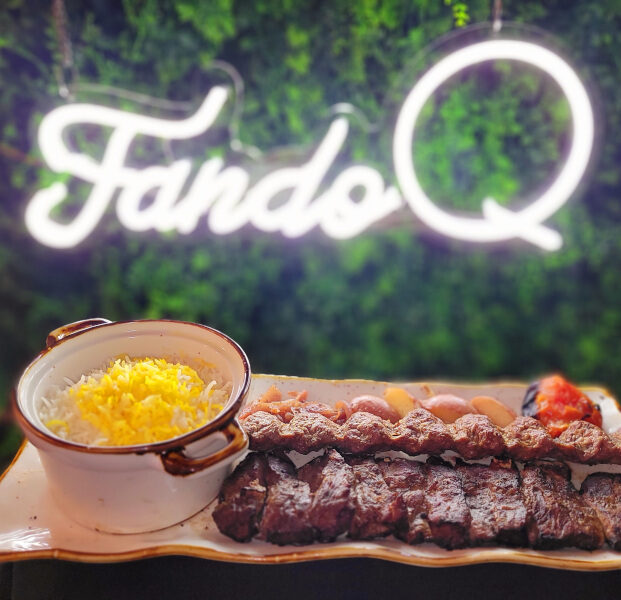
If there is one dish that Persian families cook for celebrations — weddings, Nowrouz, the return of a loved one — it is Zereshk Polo Morgh. Fragrant saffron rice studded with glistening tart barberries, crowned with golden braised chicken, this dish is as visually stunning as it is delicious. At FandoQ NY in Westbury, it is one of the dishes that defines us. Here is how to bring it into your own kitchen.
What Is Zereshk Polo Morgh?
The name breaks down simply: zereshk (barberries), polo (rice), morgh (chicken). Together they form a dish that has graced Persian tables for centuries. The rice is long-grain basmati, parboiled and then steamed in the Persian dam method to produce separate, fluffy grains with a prized golden crust — the tahdig — at the bottom of the pot. The barberries are sautéed briefly in butter with a touch of sugar and saffron to balance their tartness before being folded through the rice. The chicken is marinated in saffron, lemon, and onion, then braised until tender and burnished gold.
It is comfort food elevated to something close to art.
The Magic of Zereshk — Persian Barberries
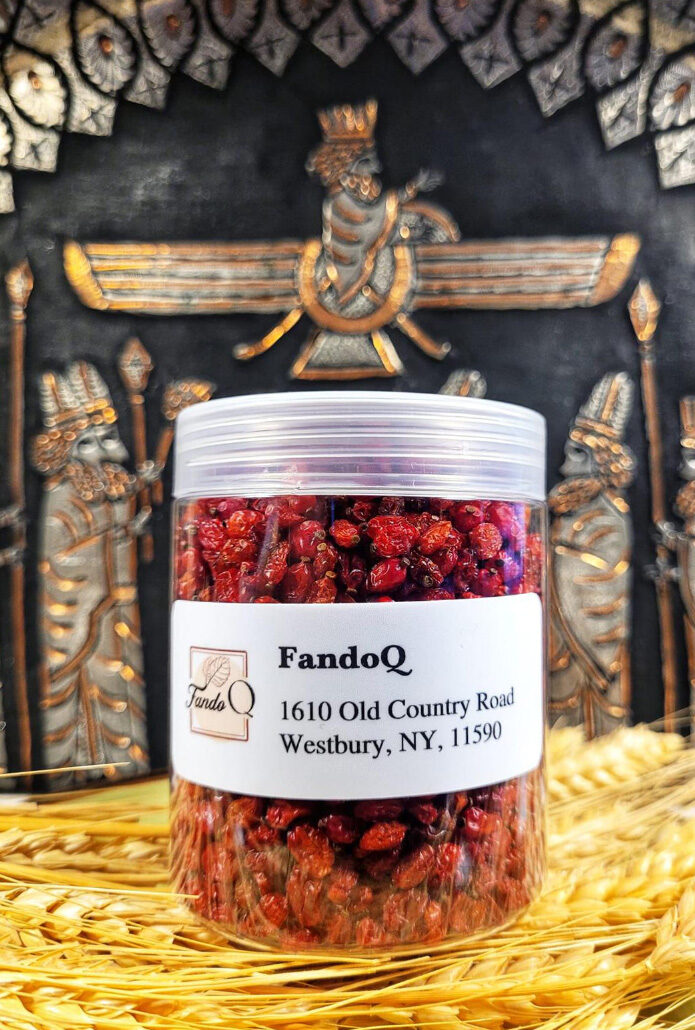
Zereshk are small, vivid-red berries from the barberry shrub, grown widely in Persia’s Khorasan region. They are intensely tart — almost like a concentrated cranberry — and they do something no other ingredient quite does: they cut through the richness of saffron butter rice and braised chicken with a brightness that makes each bite feel alive.
In Persian cooking, zereshk are almost always cooked briefly with butter, a pinch of sugar, and a spoonful of bloomed saffron. The heat softens them just slightly, the butter rounds the tartness, and the sugar coaxes out a faint sweetness without dulling their character. Folded into rice, they turn every spoonful into a sweet-sour-savory conversation.
You can find dried zereshk at Persian or Middle Eastern grocery stores, and increasingly at specialty food stores across the United States.
Ingredients
For the Saffron Chicken
- 1 whole chicken, cut into pieces (or 4 bone-in thighs + 2 drumsticks)
- 1 large onion, grated
- Juice of 1 lemon
- ½ teaspoon ground saffron, bloomed in 3 tablespoons hot water
- ½ teaspoon turmeric
- Salt and black pepper to taste
- 2 tablespoons butter or neutral oil
- 1 cup chicken broth (or water)
For the Zereshk Polo (Barberry Saffron Rice)
- 3 cups basmati rice, washed and soaked 1 hour
- ½ cup dried zereshk (barberries), rinsed
- 3 tablespoons butter, divided
- 1 teaspoon sugar
- ½ teaspoon ground saffron, bloomed in 4 tablespoons hot water (divided use)
- Salt
- 2 tablespoons neutral oil (for the tahdig layer)
How to Make Zereshk Polo Morgh
Step 1: Marinate and Braise the Chicken
Combine the grated onion, lemon juice, half the bloomed saffron, turmeric, salt, and pepper. Add the chicken pieces and coat well. Marinate for at least 2 hours — overnight if possible. When ready to cook, sear the chicken in butter over medium-high heat until golden on all sides. Add the broth, reduce heat to medium-low, cover, and braise for 30–35 minutes until cooked through. Uncover for the last 10 minutes to let the braising liquid reduce to a glossy sauce. Stir in the remaining saffron water at the end for a deep golden colour.
Step 2: Parboil the Rice
Bring a large pot of well-salted water to a rolling boil (it should taste pleasantly salty — like pasta water). Drain the soaked rice and add it to the boiling water. Cook for 6–7 minutes, stirring once, until the grains are tender on the outside but still have a firm white core at the centre. Drain and rinse briefly with lukewarm water. Taste for salt.
Step 3: Prepare the Zereshk Topping
In a small pan over medium-low heat, melt 1 tablespoon of butter. Add the rinsed zereshk, sugar, and 1 tablespoon of the bloomed saffron water. Stir gently for 2–3 minutes until the berries plump slightly and turn glossy. Do not over-cook — they should remain jewel-like and slightly firm. Set aside.
Step 4: Dam (Steaming) the Rice
This is the step that separates Persian rice from every other rice on the planet. Coat the bottom of a heavy-bottomed pot (non-stick works well) with oil and 1 tablespoon of butter over medium heat. When the oil shimmers, add a thin layer of parboiled rice and press lightly to form the tahdig crust. Mound the remaining rice on top in a gentle pyramid — do not press down. Make 5–6 holes through the rice with the handle of a wooden spoon to let steam escape. Drizzle the remaining saffron butter over the top.
Wrap the pot lid tightly in a clean kitchen towel (the towel absorbs steam and prevents condensation from dripping back onto the rice — this is the secret to fluffy, non-sticky grains). Cover tightly and cook on medium-high for 3 minutes until you hear a faint sizzle from the bottom, then reduce to the lowest possible heat. Steam for 40–45 minutes. Do not lift the lid.
To unmould the tahdig: remove the lid, place a large flat serving platter over the pot, and flip in one confident motion. A golden, crispy crust should release cleanly. If it sticks, run a thin spatula around the edge.
Step 5: Assemble and Serve
Spoon the rice onto the serving platter. Scatter the zereshk topping generously across the top. Arrange the braised chicken pieces around and over the rice, spooning any remaining saffron braise sauce over everything. Serve immediately, with the tahdig on the side for guests to break into pieces.
Pro Tips for Restaurant-Quality Results
- Bloom your saffron properly. Grind a pinch of saffron threads with a small cube of sugar using a mortar and pestle until powdery, then dissolve in hot (not boiling) water. This extracts the full colour and flavour. Steeping whole threads in cold water gives you pale yellow liquid and faint flavour — not the same.
- Do not skip the soak. Soaking basmati for at least an hour allows the grains to lengthen and cook evenly, giving you those beautiful long, separated grains that Persian rice is famous for.
- The towel wrap is non-negotiable. It is the single step that most distinguishes Persian rice technique from everything else. No towel, no perfect dam.
- Zereshk quantity is personal. Some cooks use a full cup, others just a few tablespoons. Start with half a cup and adjust to your taste.
Pair It With
Zereshk Polo Morgh is traditionally served alongside fresh herb platters (sabzi khordan), salted yogurt, and a variety of Persian rice dishes at larger gatherings. A simple Shirazi salad or yogurt with cucumber cuts through the richness beautifully.
If you are exploring Persian chicken dishes, Joojeh Kabab is the grilled counterpart to Zereshk Polo Morgh’s braised comfort — two expressions of saffron chicken that could not be more different in technique or feeling.
Try the Real Thing at FandoQ NY
There is making it at home — and then there is letting us make it for you. At FandoQ NY in Westbury, our Persian main courses are prepared with the same saffron, the same zereshk, and the same care that goes into this recipe. Come in, order Zereshk Polo Morgh, and taste the original.
We are located at 1610 Old Country Rd, Westbury, NY 11590. Call us at (516) 279-4551 or stop in — we would love to see you.