Of all the things Persian cuisine has given the world, Bastani Sonnati — the traditional Persian saffron ice cream — may be the most quietly extraordinary. Made with real saffron, Persian rose water, and crunchy pistachios, it is a dessert that tastes like nothing else in the Western canon. At FandoQ NY in Westbury, our Bastani is one of the most talked-about items on the menu — and one of the most frequently reordered.
What Is Bastani Sonnati?
Bastani is the Persian word for ice cream. Sonnati means traditional. Together they describe a specific style of ice cream that has been made in Persia for over a century — predating Western-style ice cream’s arrival in the Middle East by generations.
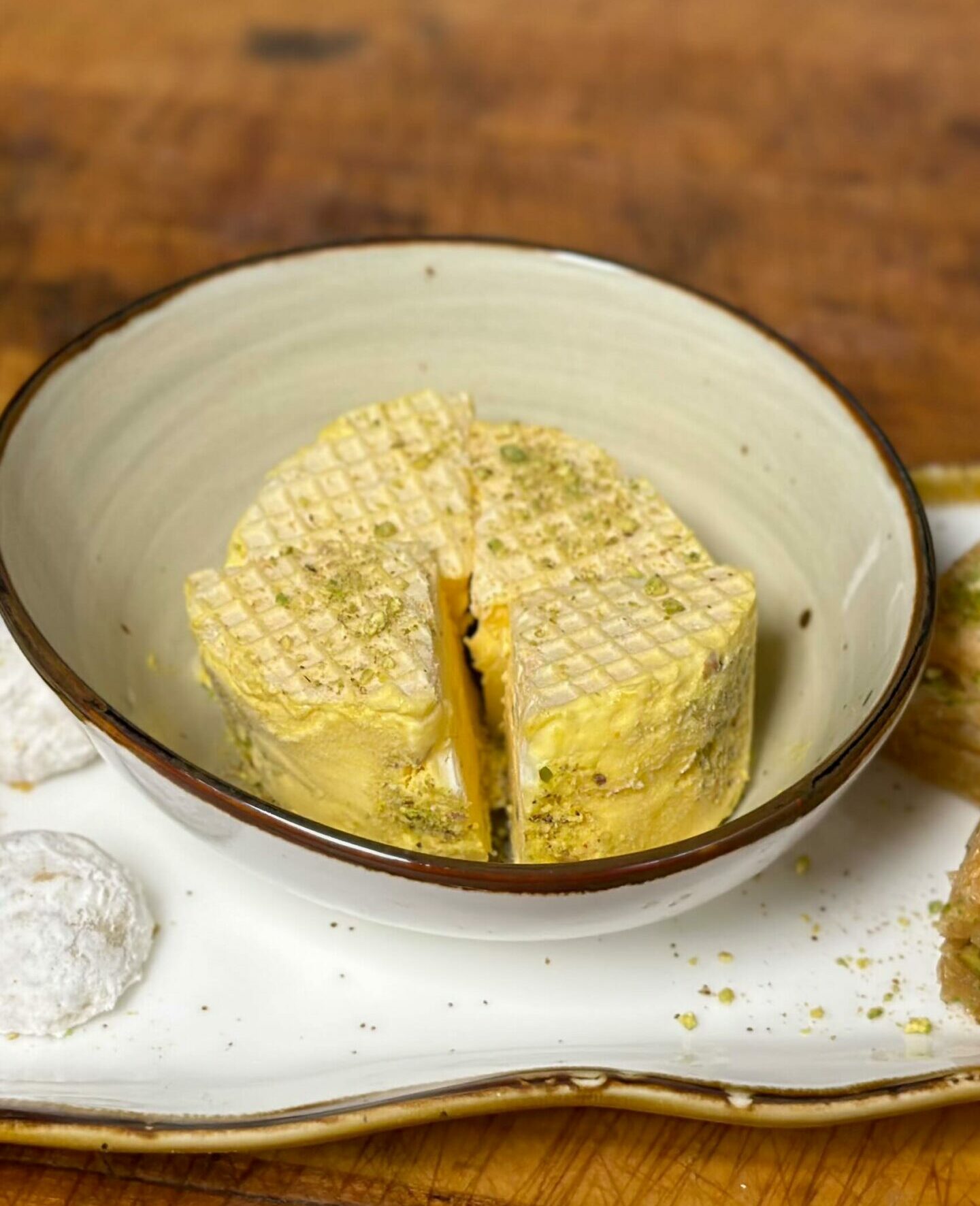
Traditional Bastani is made without eggs, instead using cornstarch as a thickener, which gives it a slightly chewier, silkier texture than custard-based ice creams. The three defining flavours are saffron (which turns the ice cream a deep, luminous gold), rose water (which gives it a delicate floral fragrance that blooms as it melts), and pistachios (for crunch and a subtle savouriness that balances the sweetness).
Some versions also include frozen cream flakes — thin sheets of whipped cream that are frozen solid and folded into the churned ice cream, creating irregular pockets of cold richness throughout. It is a textural touch that is uniquely Persian.
The Role of Saffron
The saffron in Bastani is not a background note — it is the central flavour. Real Persian saffron, bloomed properly in warm milk before being incorporated into the base, gives the ice cream its unmistakable colour and a warm, honeyed, slightly floral depth that artificial vanilla cannot approximate. The saffron is why you can identify Bastani by sight from across a room: that vivid amber-gold is one of the most beautiful colours in all of dessert making.
If you want to understand what makes saffron special, a bowl of Bastani is one of the most pleasant ways to learn. Read more about saffron’s history, flavour, and health benefits in our ingredient guide.
How Bastani Is Traditionally Served
In Persian culture, Bastani is often served between two thin wafers — similar to an ice cream sandwich — in a style called bastani laaye (layered Bastani). The contrast between the cold, fragrant ice cream and the crisp, slightly sweet wafer is one of those combinations that seems obvious only in retrospect. It is a street food classic in Tehran and a nostalgic touchstone for every member of the Persian diaspora who grew up eating it.
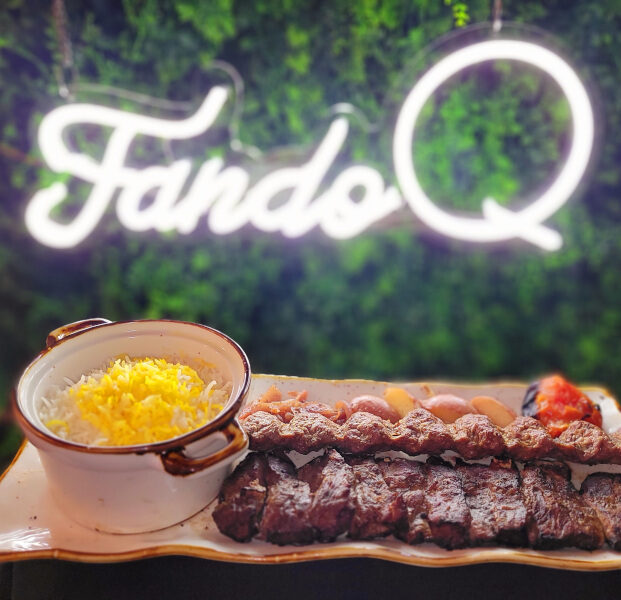
At FandoQ, we serve our Bastani as a proper restaurant dessert — plated beautifully, with the ice cream allowed to speak for itself. It is the right way to end a meal of kebabs and saffron rice.
Make It at Home
If our Bastani has made you want to try making it yourself, we have written a full step-by-step guide. Our Persian Bastani recipe covers everything: blooming saffron properly, making the cornstarch custard base, creating the frozen cream flakes, and churning it to the right consistency. It is a weekend project that rewards patience — and the result is genuinely better than anything you can buy in a store.
Pair It With
Bastani pairs naturally with strong Persian tea and something small and sweet — a piece of sohan (saffron brittle) or a date. It also follows beautifully after any of our main courses — the cold, floral sweetness is the perfect counterpoint to the smoky char of grilled kebabs or the deep richness of a Persian stew.
For more of our dessert menu, visit the page — or come in and let us take care of the sweet ending.
Visit FandoQ NY
1610 Old Country Rd, Westbury, NY 11590 — (516) 279-4551. Open Monday–Thursday from 3 PM, Friday–Sunday from 1 PM.